Why do you wish “happy” doctors’ day? If happiness was the goal of life, many of us wouldn’t have chosen to be doctors. Listening and absorbing people’s pain, illness and troubles is not happy! It maybe fulfilling, but not happy. Struggling to treat diseases which may not always be curable is anything but happy. As doctors, we learn to embrace death as a part of life early in life, as residents, at an age when others don’t venture anywhere near the philosophy of life and death. We are people treating mortal beings. Still every death points the fingers towards the treating doctors. (A discussion on death and mortality I suppose that is another topic we will discuss in another post.)
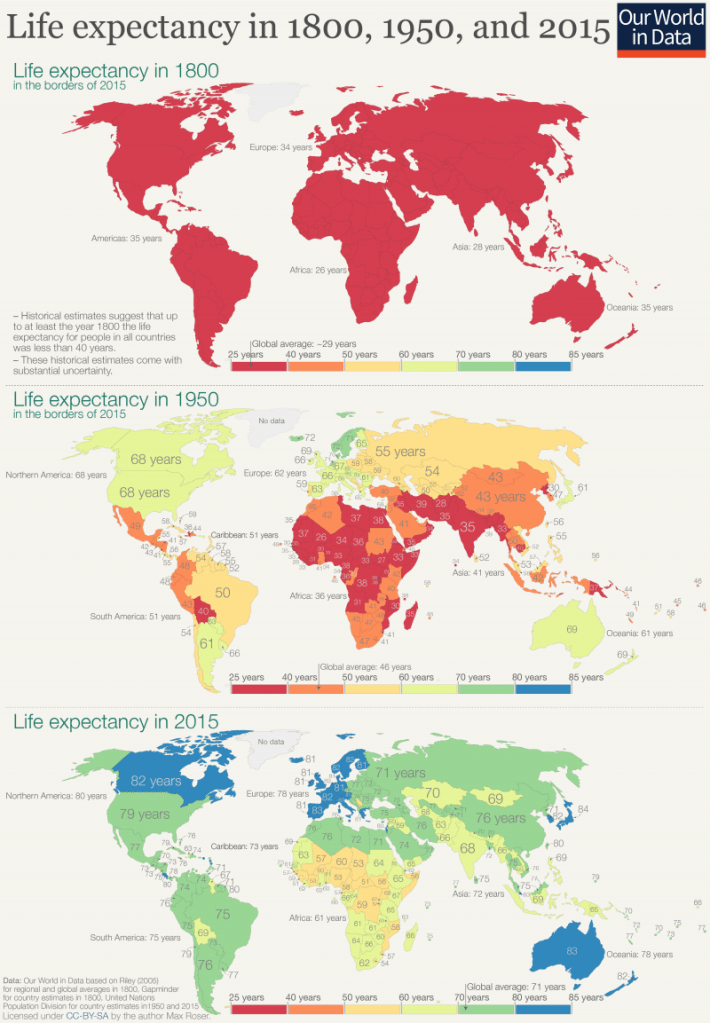
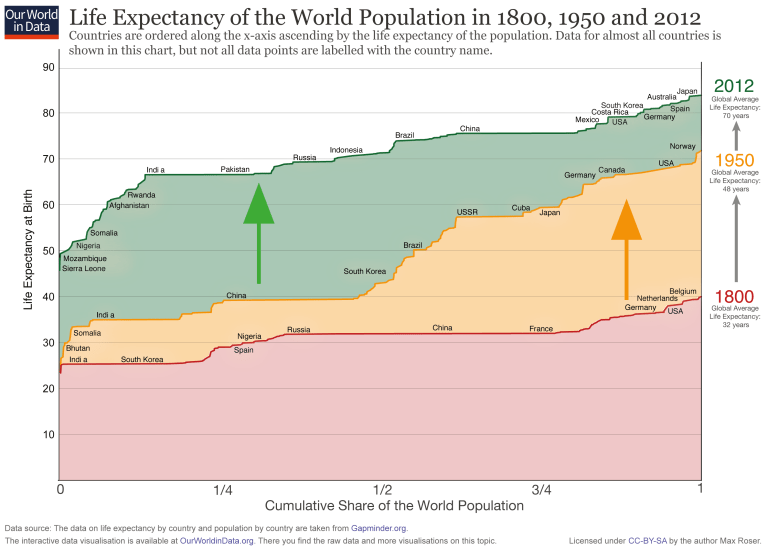
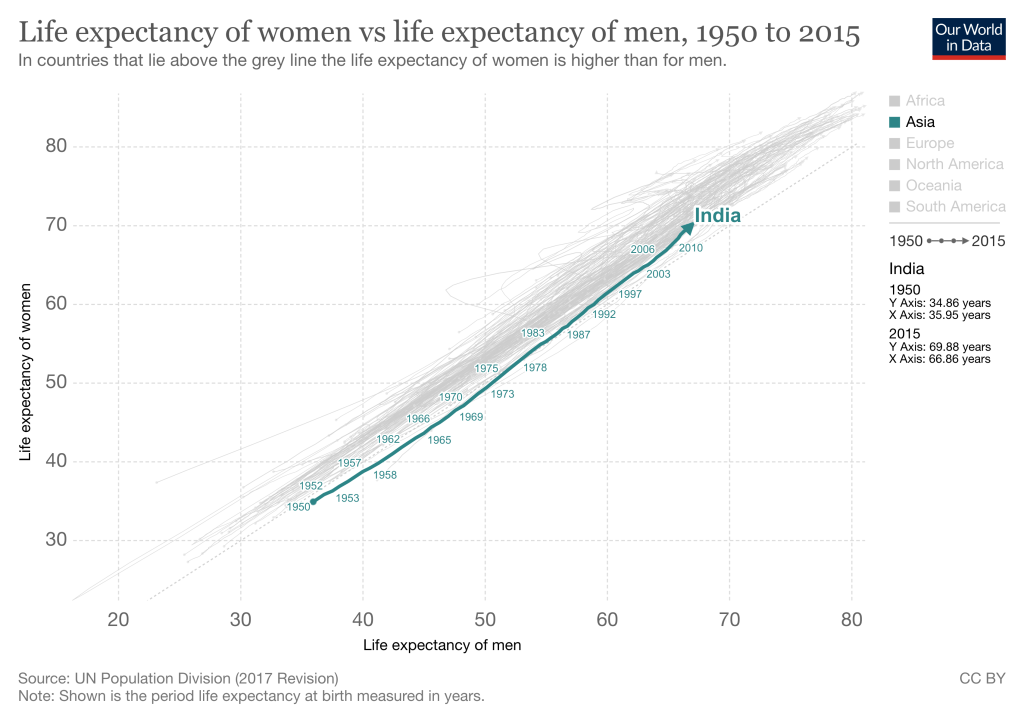
However each patient who survived or could not survive, makes us wiser. The wisdom has been actively collected and analysed, adding to a huge amount of scientific literature. As a result of this continuous research and upgradation of knowledge, doctors have successfully prolonged lives. Lots of lives, increasing life expectance in every country. In India, the average life was 35 years, now it’s 70 years. We are living twice as long. So I suppose this is something to be happy about.
Can we increase life expectancy further? There is still research going on. Lets see in the graph below, what is the most common cause of death now..noncommunicable diseases like heart disease, cancer, diabetes are the most important reasons now.

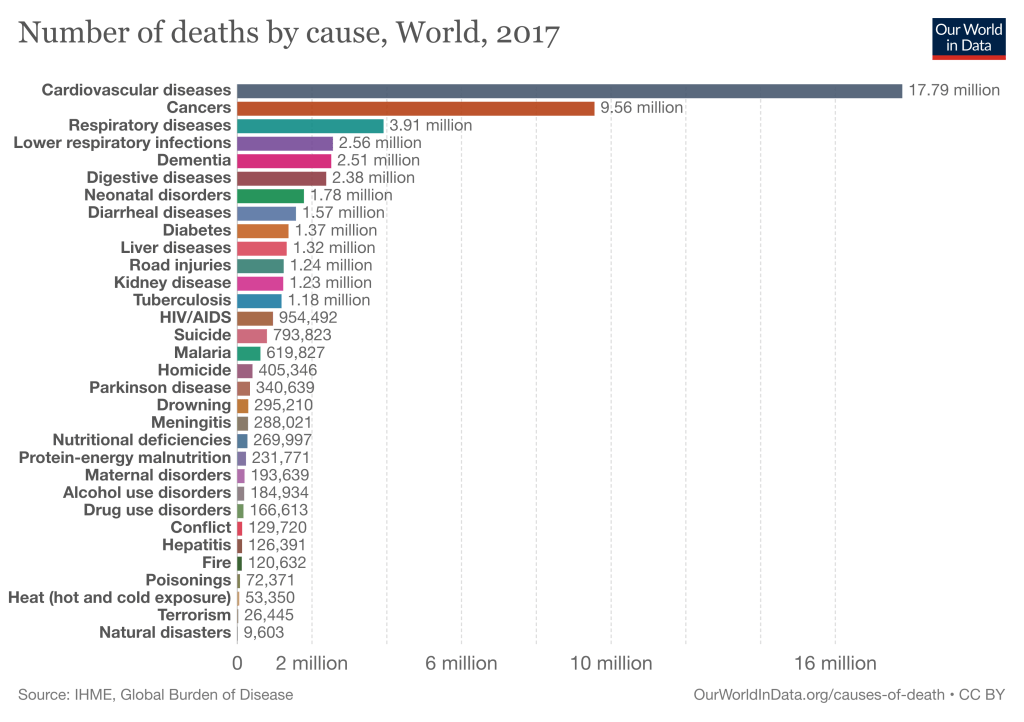
Heart disease is the number one cause of death. How can we reduce death due to heart disease? By choosing a healthier lifestyle. Now it’s not upto doctors alone to increase life expectancy. Every one of you, the choices you make! What is heart disease or CARDIO-VASCULAR disease. Cardio means Heart; Vascular means blood vessel. The blood vessels transport blood to all the organs and tissues of our body, they carry life essential oxygen for them to use. If the tissues don’t get blood they die. If the vessels are blocked due to “atherosclerosis”, that can reduce blood flow. When the blood vessels supplying heart (called coronary arteries) are affected, part of heart muscle can die and stop pumping, leading to heart attack and death. (This is something which we should discuss in details.. I suppose that is another topic we will discuss in another post.)
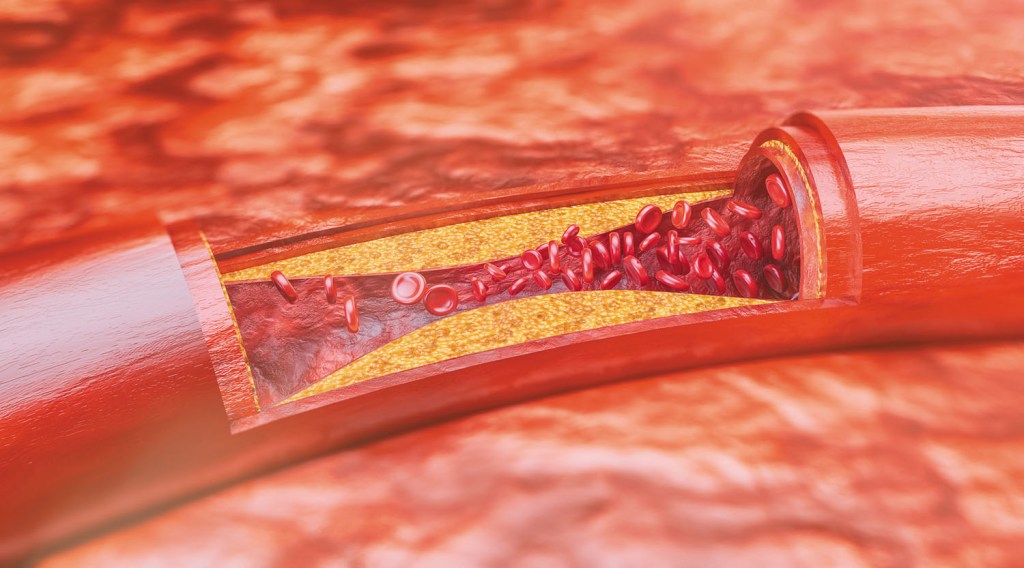
What is blocking the vessel? Fat gets deposited, then starts inflammation and scarring. We can eat healthier, exercise more, take our diabetes medicines regularly, take cholesterol medicines regularly, eat less salt, take blood pressure medicines regularly…(ways to prevent heart disease…I suppose that is another topic we will discuss in another post.)
Right now, the most important limiting factor in improving our healths is that people do not want to change their behaviours. There is research going on on on how to help people modify behaviour. Behaviour modification science tells us that we are basically irrational beings, blinded by our biases. (Cognitive biases…I suppose that is another topic we will discuss in another post.)
The current COVID19 crisis is a fast forward model of this influence of social behaviour on health. It emphasises the need to have a scientific attitude to deal with our biases. It emphasises the need to acknowledge our limitations.
As doctors we will cure sometimes, treat often and comfort always….a quote from- an oath for new doctors from “on Being”
In the presence of our families, colleagues, and communities, we take this oath in recognition of the honor and privilege of becoming a physician.
We arrive at the threshold of our chosen profession pledging to preserve our humility, integrity, and all the values which brought us to the practice of medicine. We will engage in honest self-reflection, striving for excellence but acknowledging our limitations, and caring for ourselves as we care for others.
We will collaborate with our colleagues, patients, and communities to improve the practice of medicine. We will discover, innovate, learn, and teach as responsible stewards of medical knowledge.
We will seek to heal the whole person rather than merely treat disease, committing to a partnership with our patients that empowers them and demonstrates empathy and respect. We will cure sometimes, treat often, and comfort always.
We will not betray the trust of our patients, who give us the privilege to stand by them in their most vulnerable moments. We will respect diversity in all forms and advocate for the needs of our patients in the context of their lived experiences. We will fight for health equity and social justice on behalf of our patients, our communities, and our world.
Let this Commencement day symbolize the acknowledgement of our own humanity, our dedication to the art and science of medicine, and our responsibility to serve.
 door to care
Leave a comment